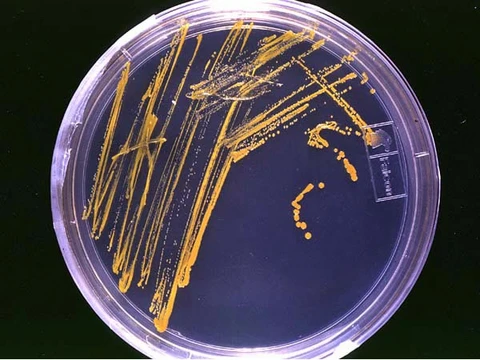
Alveolate
A diverse clade of protists with cortical alveoli and tubular mitochondrial cristae.

2013MMG320B · CC BY-SA 3.0
The alveolates are a major clade of protists within the Eukaryota, grouped with the Stramenopiles and Rhizaria into the SAR supergroup. They are characterized by cortical alveoli—flattened sacs under the cell membrane—and mitochondria with tubular cristae.
- field
- Protistology
- known_for
- Possession of cortical alveoli and tubular cristae mitochondria; includes ciliates, dinoflagellates, and apicomplexans
- classification
- Superphylum within SAR supergroup
- major_groups
- Ciliophora, Dinoflagellata, Perkinsea, Colpodellida, Apicomplexa, Squirmida
Lore & Background
The development of plastids among alveolates is debated. Cavalier-Smith proposed a chloroplast-containing ancestor shared with Chromista (the chromalveolate hypothesis). Other researchers suggested separate acquisitions, but evidence now points to a common origin of plastids from a red alga in alveolates, dinoflagellates, Colpodellida, and heterokont algae. The ancestral alveolate likely possessed a plastid, retained in chromerids, peridinin dinoflagellates, and most apicomplexans (though some, like Cryptosporidium, have lost it entirely).
Reader's Guide
The alveolates are significant as a major clade within the eukaryotic tree of life, encompassing diverse forms from free-living flagellates to obligate parasites like apicomplexans. Their shared ultrastructural features—cortical alveoli and tubular mitochondrial cristae—unite groups that were once considered unrelated. The group's evolutionary history illuminates the complex interplay between predation and photosynthesis, particularly through the myzozoan lineage, which includes dinoflagellates and apicomplexans. The debate over plastid origins and the number of surrounding membranes highlights ongoing questions about endosymbiosis and the recycling of organelles. Ciliates, as model organisms, have provided deep insights into eukaryotic genetics and reproduction. The alveolates also include parasites of medical and economic importance, such as Toxoplasma and Cryptosporidium, whose reduced mitochondrial genomes offer clues to the evolution of parasitism.
Did You Know?
- Almost all sequenced mitochondrial genomes of ciliates and apicomplexa are linear, with no known apicomplexan having a circular mitochondrial genome; for instance, Babesia microti has a linear mitochondrial genome.
Cellular Architecture and Defining Features
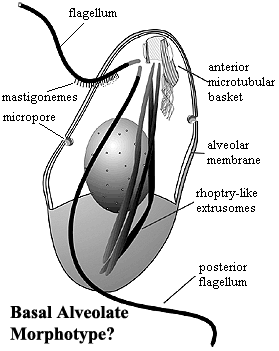
The alveolates are united by a distinctive submembrane layer of flattened vesicles called alveoli, which sit just beneath the cell surface and provide structural support. This arrangement typically produces a flexible pellicle, though in armored dinoflagellates the alveoli can house rigid plates that give the cell a more rigid exterior. Beyond this signature feature, members of the group share mitochondria with tubular cristae and often display pore-like intrusions piercing the cell surface. Ecologically, alveolates span an extraordinary range: they include free-living predators, parasitic organisms, photosynthetic species, and flagellated hunters. Their mitochondrial genomes reveal further complexity. In ciliates and apicomplexans, nearly all sequenced mitochondrial genomes are linear and carry their own mtDNA, though at greatly reduced sizes. Notable exceptions include Cryptosporidium, which retains only a mitosome; Acavomonas and Babesia microti, which harbor circular mitochondrial genomes; and Toxoplasma, whose mitochondrial genome is fragmented into twenty-one sequence blocks that recombine to form longer segments.
Taxonomic Discovery and Classification
The recognition of alveolates as a coherent biological group emerged gradually. During the 1980s, researchers first proposed that apicomplexans, dinoflagellates, and ciliates shared a common lineage, but it was not until the early 1990s that ribosomal RNA sequence comparisons—most notably the work of Gajadhar and colleagues—provided the molecular confirmation needed to solidify the connection. Despite the formal nomenclature, many biologists in the field still favor the simpler, colloquial term alveolate when referring to members of this lineage in everyday scientific discourse.
Evolutionary Origins and the Plastid Question
A central question in alveolate evolution concerns the origin and fate of their plastids. Cavalier-Smith originally proposed that alveolates descended from a chloroplast-bearing ancestor, a view encapsulated in the chromalveolate hypothesis. Alternative theories suggested that alveolates initially lacked plastids entirely and that dinoflagellates and apicomplexans each acquired them independently. Current evidence, however, points toward a more unified picture: alveolates, dinoflagellates, Colpodellida, and heterokont algae all appear to have obtained their plastids from a red alga, with a shared origin of this organelle across all four clades. Chromerids, apicomplexans, and peridinin dinoflagellates are thought to have retained this ancestral plastid, and the common ancestor of alveolates and heterokonts was likely itself photosynthetic.
Diversity, Ecology, and Phylogenetic Relationships
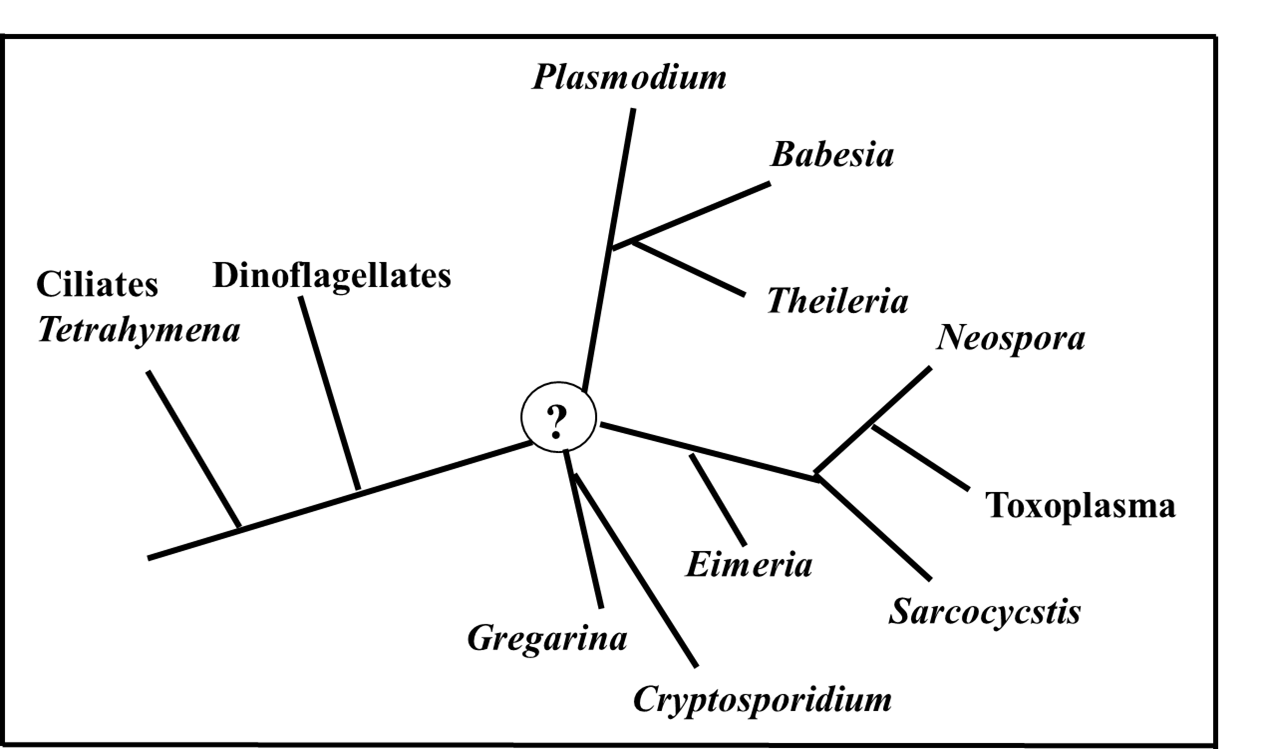
Alveolata encompasses roughly six major lineages, each occupying a distinct ecological niche. Ciliophora are ubiquitous protozoa bearing rows of short cilia and possessing two nuclei. Dinoflagellata, predominantly marine, include many species equipped with chloroplasts. Apicomplexa are parasitic, non-photosynthetic organisms that lack axonemal locomotive structures outside of their gamete stage. Colpodellida comprise marine photosynthetic protozoa, while Perkinsea and Squirmida represent additional branches of this diverse assemblage. Phylogenetically, apicomplexans and dinoflagellates appear more closely allied to one another than either is to ciliates; both groups possess plastids and a bundle or cone of microtubules at the cell apex. In apicomplexans this structure forms part of a penetration complex for entering host cells, whereas in some colorless dinoflagellates it functions as a peduncle for capturing prey.
Gallery
More in Microbiology 1-24
Elsewhere in the Microbiology universe
Spotted an error? Know more?
This is a living reference — every entry is fact-audited, and reader corrections feed straight into our audit queue. Suggest an edit · See this site's audit record