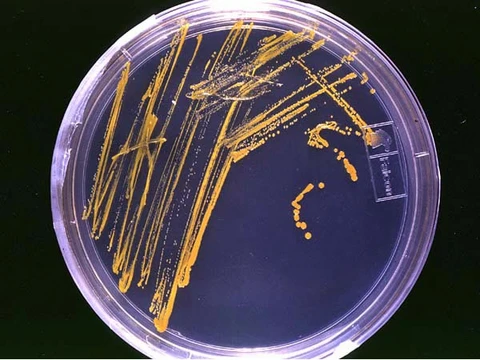
Fermentation
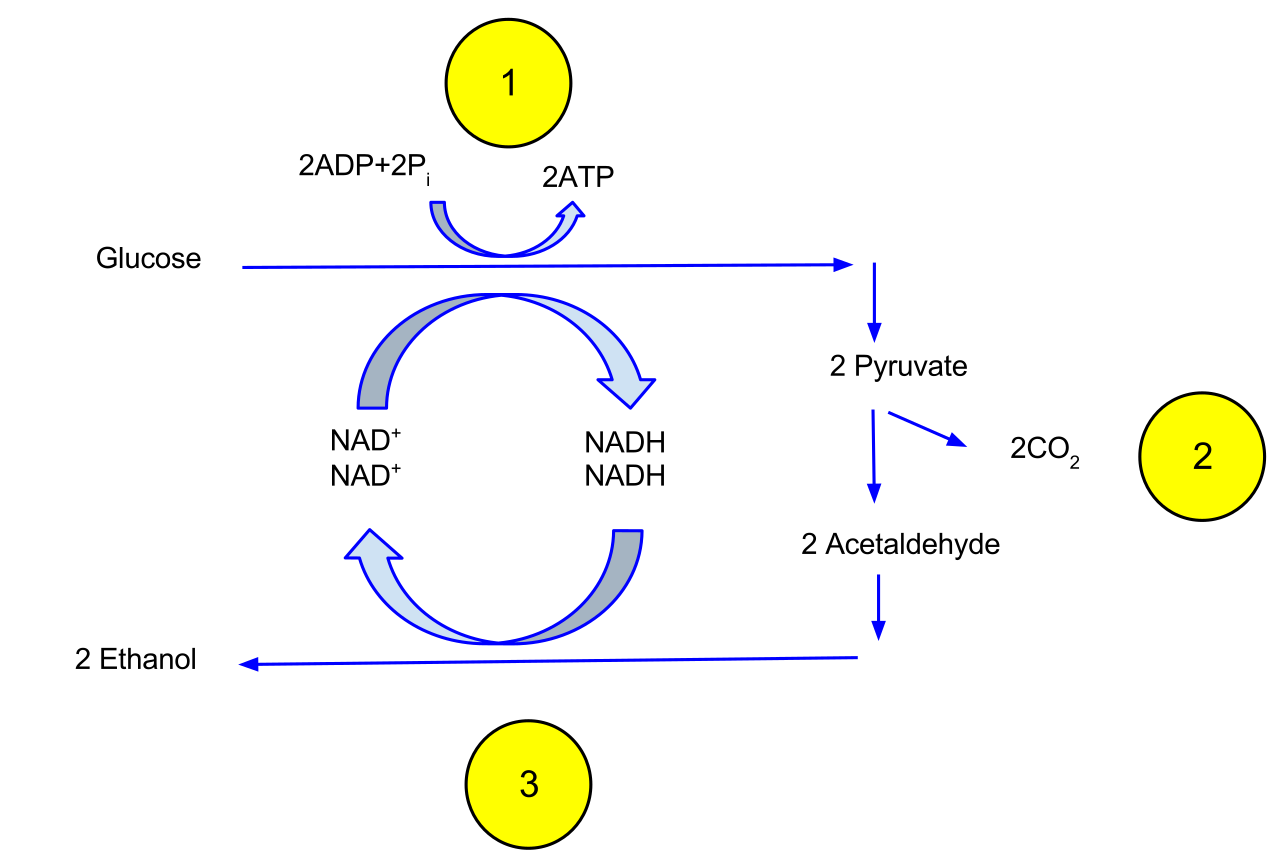
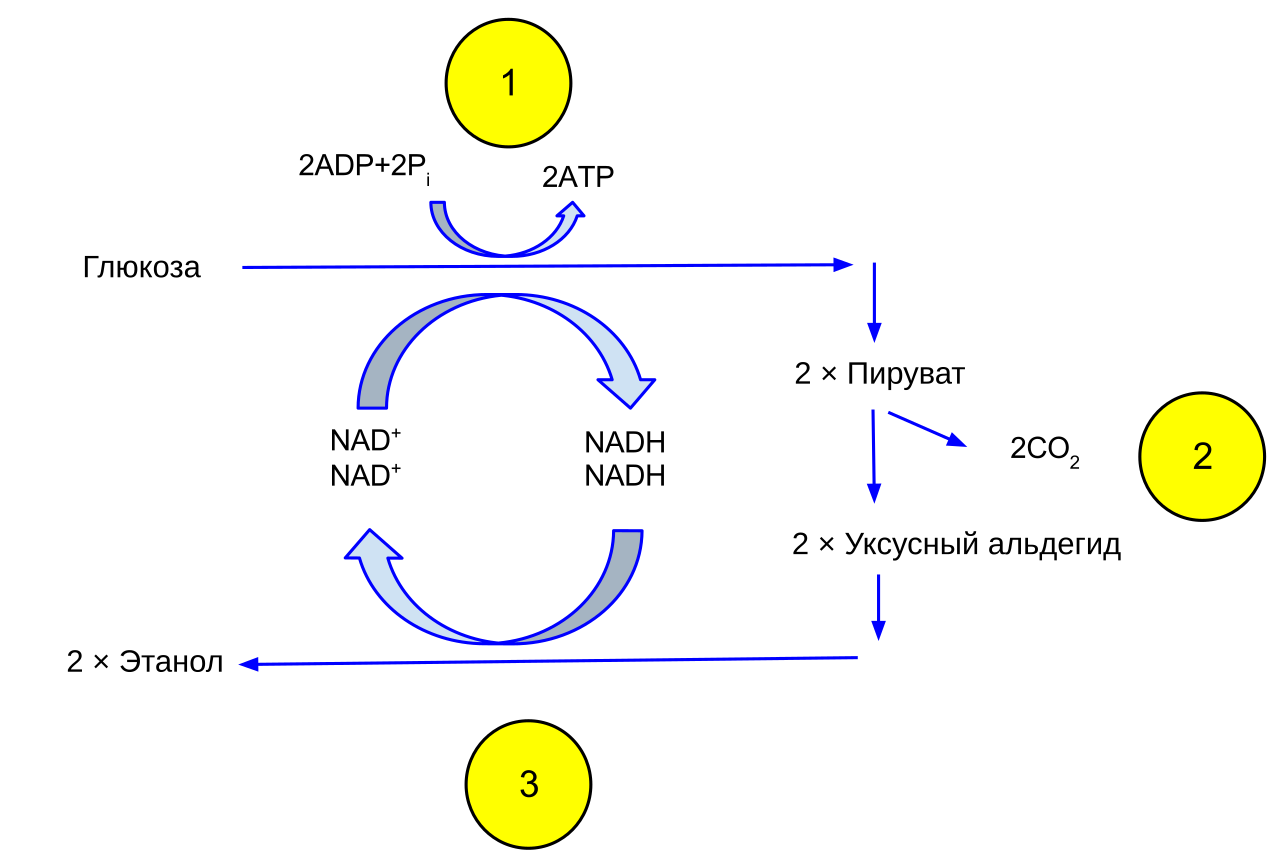
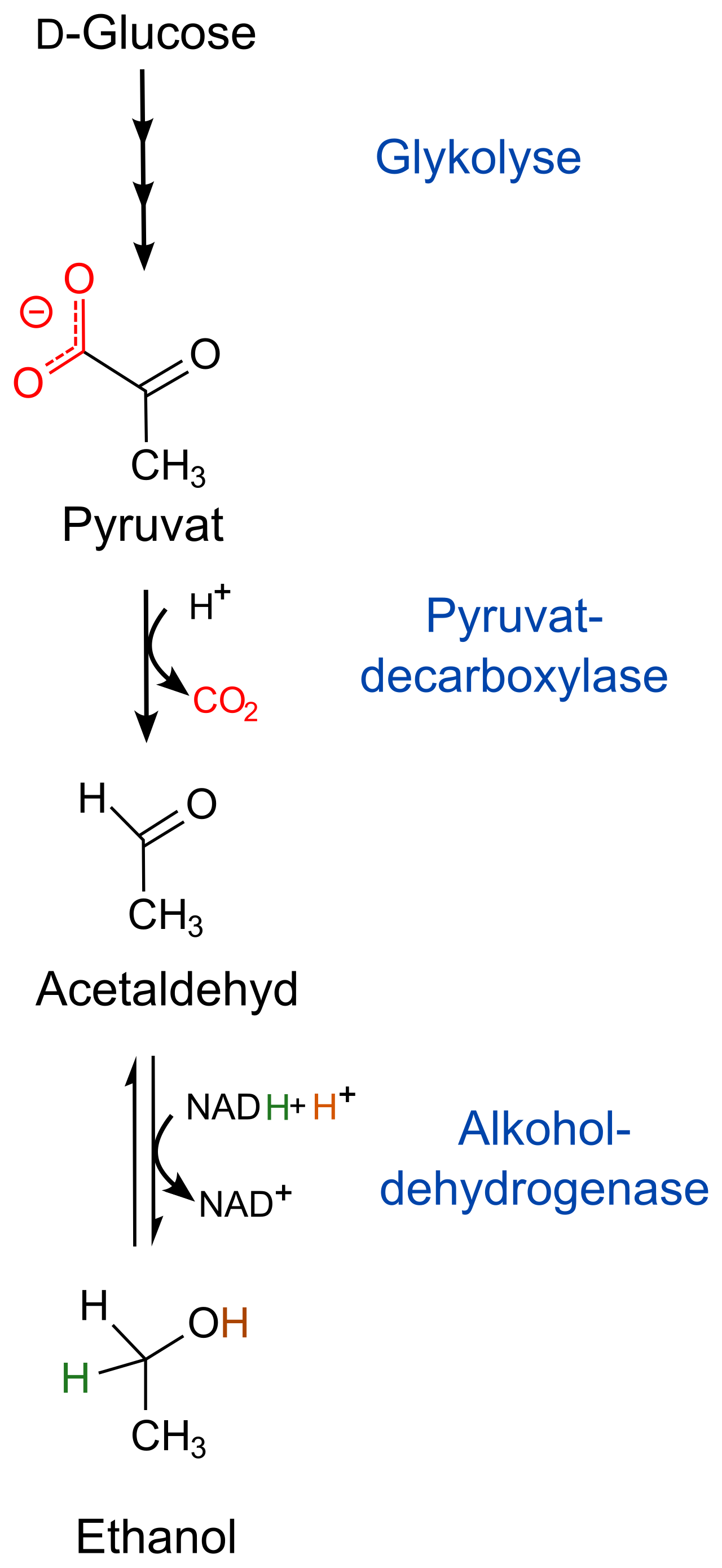
Anaerobic metabolism producing ATP and organic end products.

No machine-readable author provided. Norro assumed (based on copyright claims). · Public domain
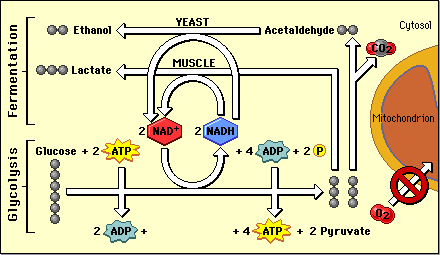
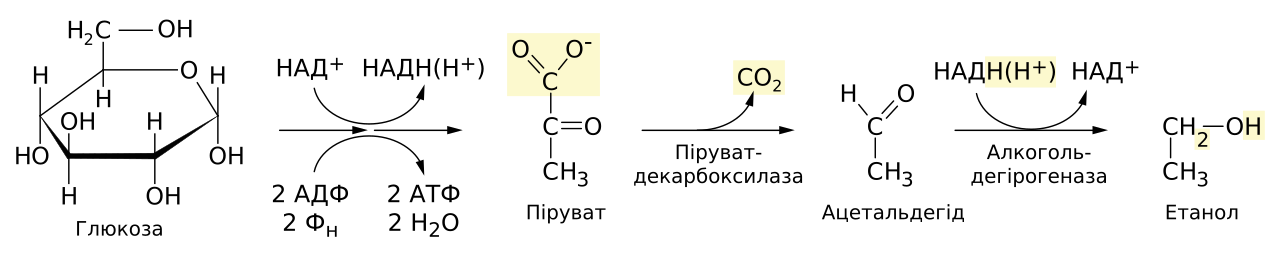
Fermentation is a type of anaerobic metabolism that harnesses the redox potential of reactants to produce adenosine triphosphate (ATP) and organic end products. Fermentation is important in human society for health benefits, unique flavor profiles, and industrial production of commodity chemicals such as ethanol and lactate.
- field
- Biochemistry, Microbiology
- known_for
- Anaerobic metabolism producing ATP and organic end products
- substrates
- Simple sugars, glucose, other organic molecules
- common_products
- Lactate, acetate, ethanol, CO2, succinate, H2, propionate, butyrate
- ATP_yield
- 2 to 5 ATP per glucose (vs. 32 in aerobic respiration)
Lore & Background
Fermentation is defined as catabolism where organic compounds are both the electron donor and acceptor, though this definition does not encompass all forms, such as propionate fermentation using H2 as an electron donor. Fermentation forms ATP through substrate-level phosphorylation. Industrial fermentation is defined loosely as a large-scale biological manufacturing process, focusing on manufacturing rather than metabolic details.
Reader's Guide
Fermentation is significant because it allows organisms to generate ATP without an exogenous electron acceptor, enabling energy production under anaerobic conditions. It is relatively inefficient, producing 2 to 5 ATP per glucose compared to 32 in aerobic respiration. Over 25% of bacteria and archaea carry out fermentation, especially in the phylum Bacillota. In humans, fermentation pathways occur during exercise and in disease states like sepsis, providing energy for 10 seconds to 2 minutes.
Did You Know?
- Over 25% of bacteria and archaea carry out fermentation.
- Fermentation produces between 2 and 5 ATP molecules per glucose, versus 32 during aerobic respiration.
- The most common fermentation products include lactate, acetate, ethanol, carbon dioxide, succinate, hydrogen, propionate, and butyrate.
Breadth of Industrial Applications
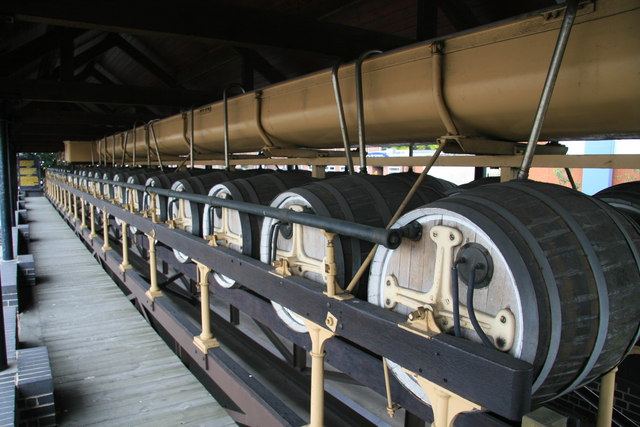
Industrial fermentation extends far beyond the familiar world of bread, beer, and yogurt. At its core, it is the deliberate harnessing of microbial metabolism to manufacture products at scale for the chemical and food industries. Commodity chemicals like acetic acid, citric acid, and ethanol are routinely produced this way. Perhaps even more striking, the vast majority of commercially available industrial enzymes—lipase, invertase, rennet—are now generated using genetically modified microorganisms rather than extracted from animal or plant sources. In other cases, the living material itself is the target product: single-cell proteins for feed, baker's yeast for baking, and lactic acid bacteria starter cultures that drive cheesemaking. The organisms employed span bacteria, algae, and fungi such as yeasts and molds, though plant and animal cell cultures like CHO cells and insect cells also find their place in industrial settings. Each organism demands tailored attention to dissolved oxygen, nutrient supply, and temperature, making the choice of biological agent a foundational decision in any fermentation operation.
The Four-Part Classification Framework
To make sense of the enormous variety of industrial fermentation processes, practitioners organize them into four broad categories, though these categories frequently overlap in practice. The first type targets the production of viable biomass—living cellular material that is itself the desired output. The second focuses on extracellular metabolites, meaning chemical compounds secreted into the surrounding medium by the organism. The third category concerns intracellular components, particularly enzymes and other proteins that must be recovered from within the cells. The fourth type involves substrate transformation, where the starting material is chemically altered and that altered substrate becomes the product, as in converting alcohol to vinegar. These four frameworks help engineers and microbiologists think clearly about what they are actually trying to achieve. The rate at which fermentation proceeds is governed by the concentration of microorganisms, cells, cellular components, and enzymes, alongside environmental variables such as temperature, pH, and—when the process is aerobic—the available oxygen. Recovering the final product often requires concentrating what began as a dilute solution, adding another layer of complexity to the overall operation.
The Biological Timeline of a Fermentation Run
Once a growth medium is inoculated with the chosen organism, the fermentation does not immediately begin in earnest. The cells first enter a lag phase, a period of adaptation during which they acclimate to their new environment before dividing. This is followed by the log or exponential phase, in which the growth rate climbs steadily and the population multiplies rapidly. As nutrients are progressively depleted and toxic byproducts accumulate, the culture enters a deceleration phase where the pace of growth is checked. Eventually, growth halts entirely and the culture settles into a stationary phase, a steady state in which biomass remains roughly constant unless accumulated chemicals trigger a process called chemolysis, breaking cells apart. If contamination is absent, the chemical makeup of the broth stays stable. However, once nutrients are exhausted or toxin levels become excessive, cells grow senescent and begin dying. The total biomass may not visibly shrink, but the number of viable organisms declines. Understanding each of these phases is critical for timing product harvest and managing the health of the culture.
From Lab Bench to Industrial Vessel
One of the most formidable challenges in industrial microbiology is scale-up: translating a procedure that works in a laboratory flask into a process that performs reliably in a massive production vessel. It is well established that conditions optimized at bench scale can fail spectacularly when first applied to industrial equipment. There is no universal formula for this translation because fermentation processes vary so widely. Among the most critical scale-up criteria are maintaining constant power consumption per unit volume of broth and preserving a constant volumetric oxygen transfer rate. Beyond scale-up, day-to-day operation demands rigorous process control. The fermentation medium, incoming air, and all equipment must be sterilized to prevent biological contamination. Foam must be managed through mechanical destruction or chemical anti-foaming agents. Operators continuously monitor and adjust pressure, temperature, agitator shaft power, and viscosity. In most industrial settings, organisms are submerged in a liquid medium, though some processes—cocoa bean fermentation, coffee cherry processing, miso production—take place on the moist surface of the substrate rather than in full suspension.
Gallery
More in Microbiology 1-24
Elsewhere in the Microbiology universe
Spotted an error? Know more?
This is a living reference — every entry is fact-audited, and reader corrections feed straight into our audit queue. Suggest an edit · See this site's audit record